SOLUTIONS

Automated dosing lines: continuous productivity with maximum precision

When should you automate? Productivity and ROI

Dosing line automation is a key factor in increasing production efficiency and ensuring consistent quality in every processing cycle. The choice between a manual and automated system mainly depends on the number of parts processed per shift and the required cycle time. When these values exceed a certain threshold, manual dosing slows production and increases the risk of quality variation.

An automated plant deletes downtime between cycles, standardises dosing accuracy regardless of the operator and frees up human resources for higher-value activities. This results in faster return on investment and greater reliability of the production process.

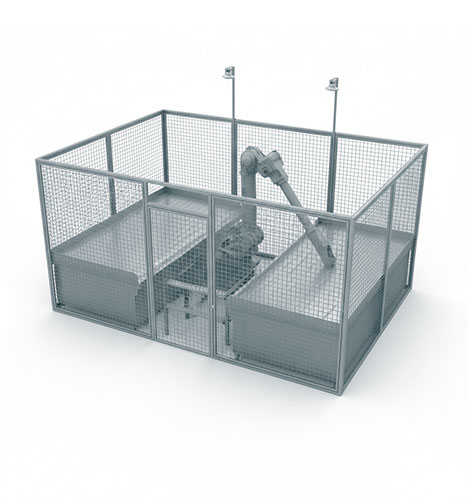
Automated dosing modes

Automated lines can operate with different dispensing modes depending on application requirements:

Dot
dispensing

Precise dispensing in defined positions, ideal for component bonding, gasket application or filling specific cavities, typically in robotic cells.

Continuous
dispensing

Constant dispensing along a predefined path, often combined with Cartesian or anthropomorphic robots. Perfect for adhesive beads, linear filling and lamination processes.

Intermittent
dispensing

On/off cycles synchronised with part movement on the line, commonly used in conveyor-based or automatically advancing production.

Integrable accessory functions

Automated systems can include additional functions to improve efficiency and maintenance:

  • Automatic and remote washing between cycles;

  • Component temperature adjustment and control;

  • Real-time monitoring of flow rate, pressure and mix ratio;

  • PLC interface with SCADA integration options;

  • Alarms and diagnostics for predictive maintenance.

sistemi-automatizzati-dosaggio-resine

Request an automation feasibility analysis

Request a quote